Establishing Africa’s
first decentralized
shared crypto-currency
trading platform
Date
2021
Role
Wireframing, UI Design, Prototyping, UX Strategy, Customer Interviews
Swapmonkey, a decentralized Peer to Peer crypto trading stage where users immediately exchange crypto resources through trading from a protected, quick and secure decentralized liquidity pool.
Problem Statement



Solutions
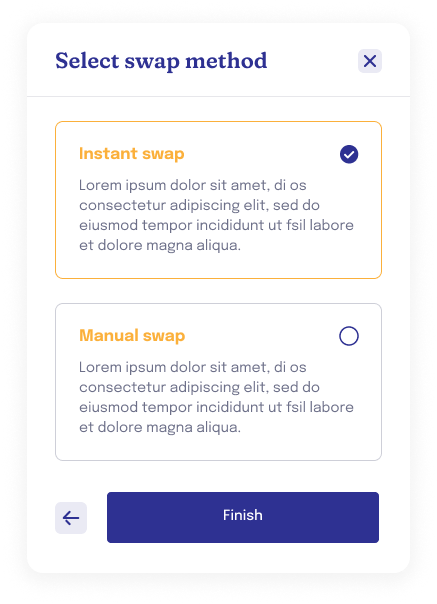
Swap on Request
The primary goal of the first iteration was to address the impact of the policy ban. Swapmonkey’s MVP, we decided not to follow other brands’ lead and avoid the traditional route of peer to peer trading after the ban. In this case, we developed the “instant swap” option, which makes assets from a decentralized liquidity pool instantly available in a user’s wallet once a swap is initiated and authorised. To avoid interfacing with the bank, which would violate the central monetary authority’s policy.
Manual Swap
Following the initial release, we conducted new interviews with users and the majority expressed a desire to have more control over how they intend to trade their assets. They made it clear to buyers that using the “instant swap” option was becoming increasingly expensive. To address this user pain point, we had to redesign the flow to accommodate this new feature. This method works similarly to the peer-to-peer method. Buyers can browse listings while sellers can list their asset for sale. We investigated existing platforms and how they functined.
We also spoke with some users who use these platforms. We discovered 2 underlying issues with this method:
Trade listers were harmed by blockchain transfer fees as a result of having to fulfil numerous orders regardless of quantity purchased. In most cases, these fees are set. At the end of the day, they lose money due to charges.
False payments were made to the seller in severe cases.
We used the Hicks law to solve this problem
A buyer is compelled to swap either 20%, 40%, 60%, 80%, or 100% of the listed asset by ensuring the quantity of assets a buyer can buy is not open ended. Manual swap was a cheaper alternative to swap for sellers.
To ensure transaction security and transparency, Swapmonkey offers the escrow feature, which locks all assets included in the listing and makes them available to both parties only after a successful swap.
A simple and intuitive method for creating swap listings (.gif) The first step in listing
Choose the tokens you want to swap.
Determine the minimum and available amount.
Determine your swap rate.
Publish
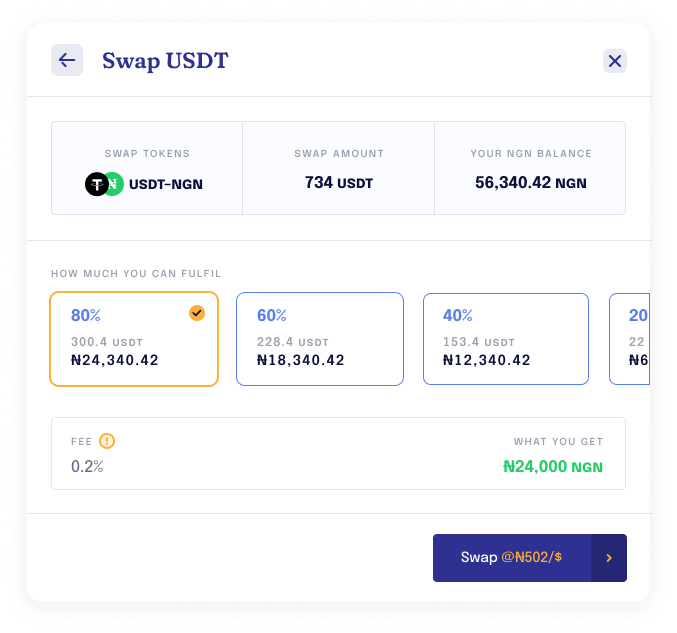
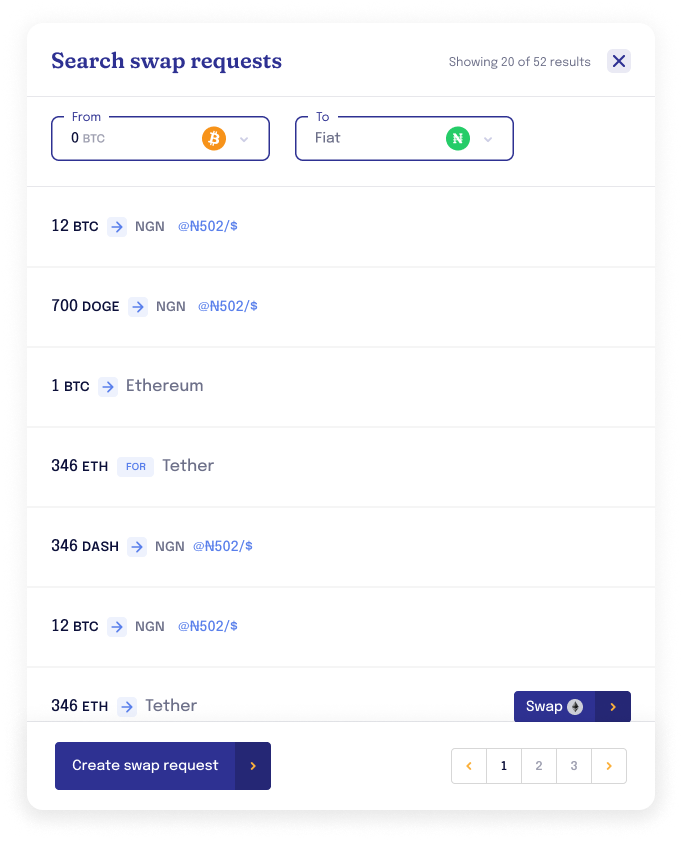
Reworked Manual Swap
In a listing, swapping in percentages distorts the volume of the asset left to swap. When a buyer does not make 100% of a swap, refactoring the remaining percentage of assets left between 20% and 100% messes up the volume of the asset in the trade. As a result, it becomes an endless cycle.
Buyers come to the platform based on their research to purchase a specific fiat value of cryptocurrency. When using the percentage method, there is a high probability that the percentages stated are either higher or lower than the buyer’s budget, resulting in a mismatch.
To address this, we returned to the open mechanism of allowing a user to enter the amount of asset type he wishes to purchase from the asset list. An easy-to-use filtering system is also included, allowing users to narrow down the listings based on what they want to swap.
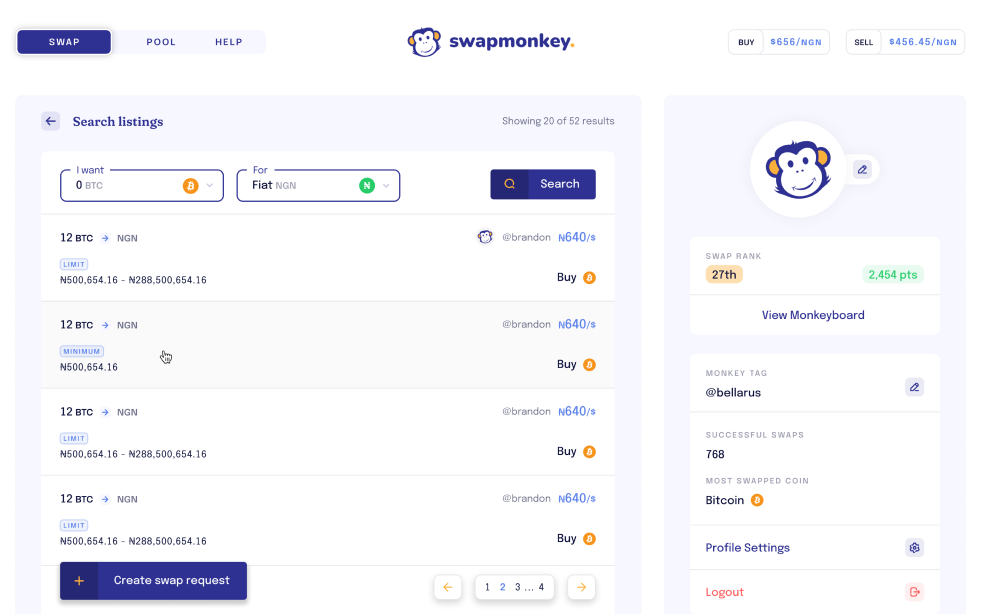
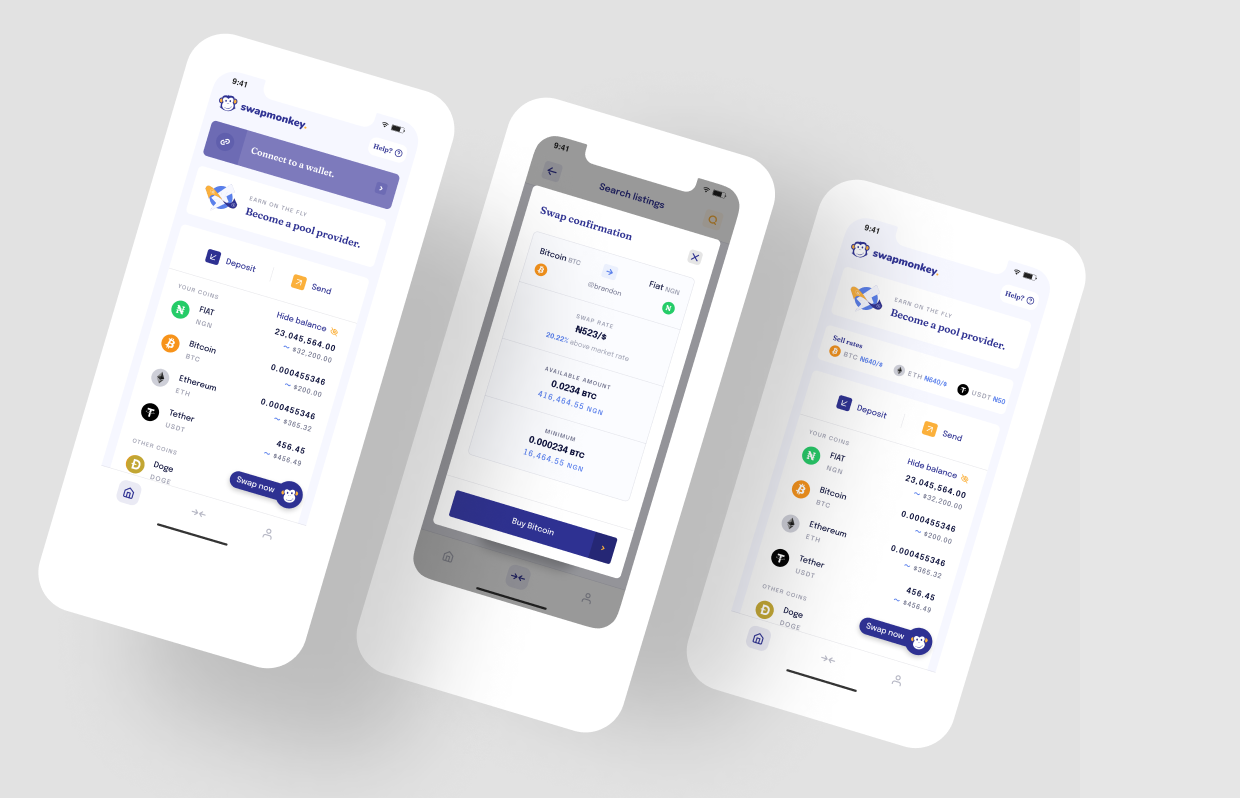

Educate user on what some terms mean using tooltips, short onboarding

Working with multiple currencies, exchange, conversion and quotes
Identified Problems
Flux is a cryptocurrency-powered cross-border payments company that operates in over 40 countries. During the onboarding process, we discovered users’ inability to verify their identity, with only about 6-10% successful verification. As a result, 35% of users actively transacted. We replaced unused features with new ones, lowering churn from 70% to 30%. This resulted in a 5X increase in transaction volume and a 60% increase in customer acquisition.

Problem Two
Unused features cause an increase in business expenses.
 Flux Store
 Flux Gift
Problem Three
The issue with information hierarchy
Some users discovered that some of the important actions they wanted to take were hidden in menus and sidebars, making it more difficult for them to complete their task. While addressing this, we discovered that “wallet funding” is an important task for users. We assigned virtual account numbers, but transfers made to these accounts do not always reflect, resulting in panicked and irate users. Some customers simply do not want another account number added to their already large collection.
Taking customer and data insights over a 6-month journey

We reverse engineered the process to collect only the users BVN and a photo selfie during the onboarding process.

By doing this, our machine learning algorithms match the customer picture contained in the BVN to the selfie photo provided by the user. With an accuracy of 99%, This method helped improve our percentage of newly registered users who get verified from 25% to 80%.
We learned from customer service representatives, close customer interactions and constant data reviews that users prefer to keep their spending in one place. They require more than just the ability to move money to help them safely transition from their traditional bank. They want Flux to handle their other payment requirements.
New features were developed to support new use cases.
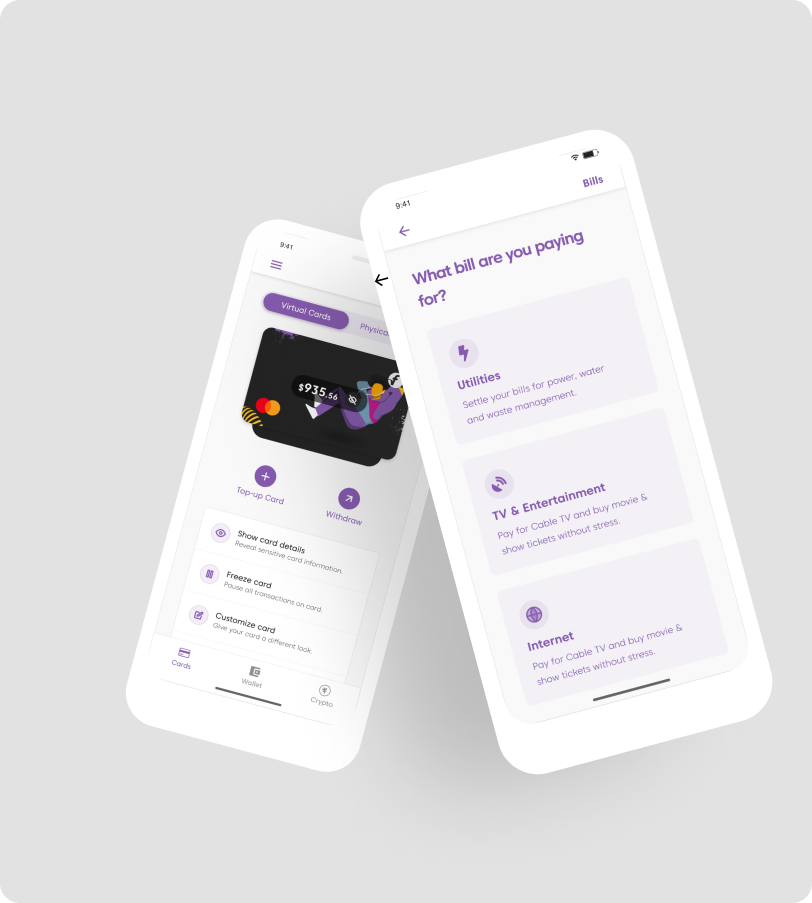

Virtual Cards
This informed our decision to introduce the virtual cards feature to help our users make safe and secure payments online.

Bill & Utility Payment
In addition, a utility payment feature was introduced to allow users to pay bills such as electricity, cable TV, and internet subscriptions through the app. The bill and utility payment features yielded encouraging results, with 50% of the revenue coming.

I was completely baffled the first time I used the app. The most important things to me were hidden in menus and sidebars.
Teju OdutolaA modern design layout that users can easily navigate
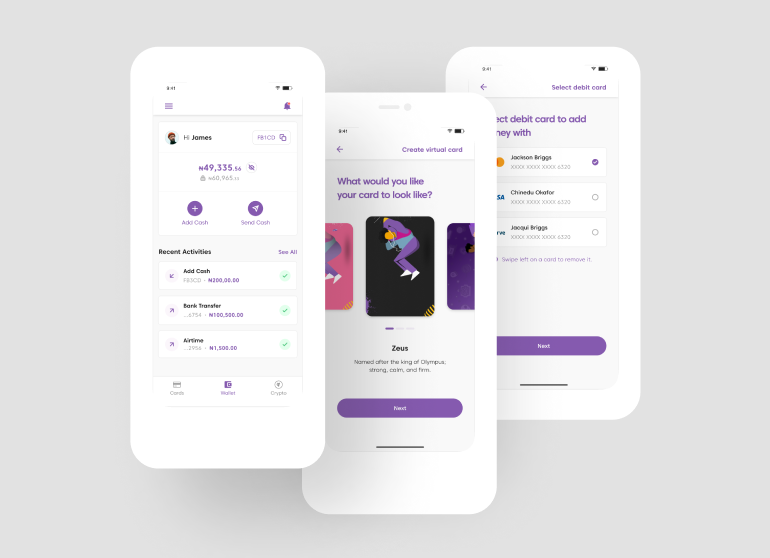
The challenge resulted in a new interface layout that users can easily navigate. Wallet transfers and crypto transactions were the most popular features on the app. For the design team, this means that users must be able to access this segment more quickly in order to complete their tasks. We added a “debit card” method of adding money. Support tickets for funding-related issues have decreased from 52 to 4 per day.
A new website that is both exciting and interactive
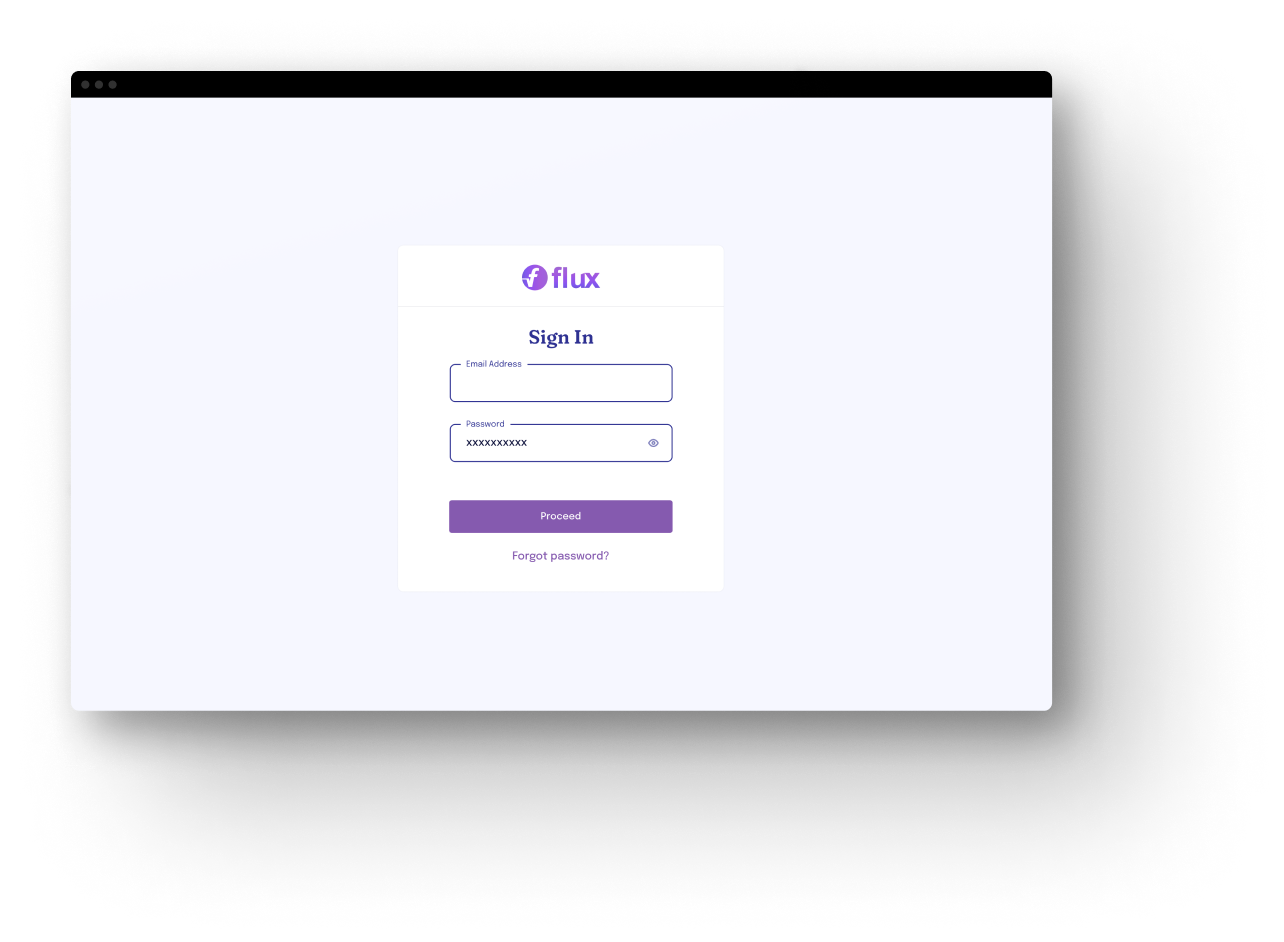
I went ahead and created a brand new website to showcase the app’s new features. The use of bold text, imagery and graphic elements received special consideration. Comments from our social media accounts.
Visit Website
Impact

4000
New users with over 3500 successfully verified
30%
of our customers create virtual cards with 25% funding right after they create the cards.
0% to 40%
With the addition of this method, the percentage of customer funding increased from 100% to 60% via bank transfer and from 0% to 40% via debit card.
